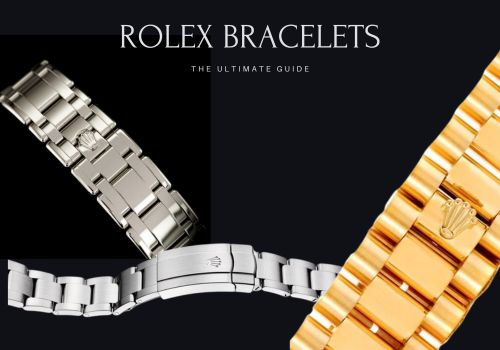
Learn more about the variables of the bracelets as well as for there characteristics in just a few minutes! 

ROLEX BRACELET Jubilee 

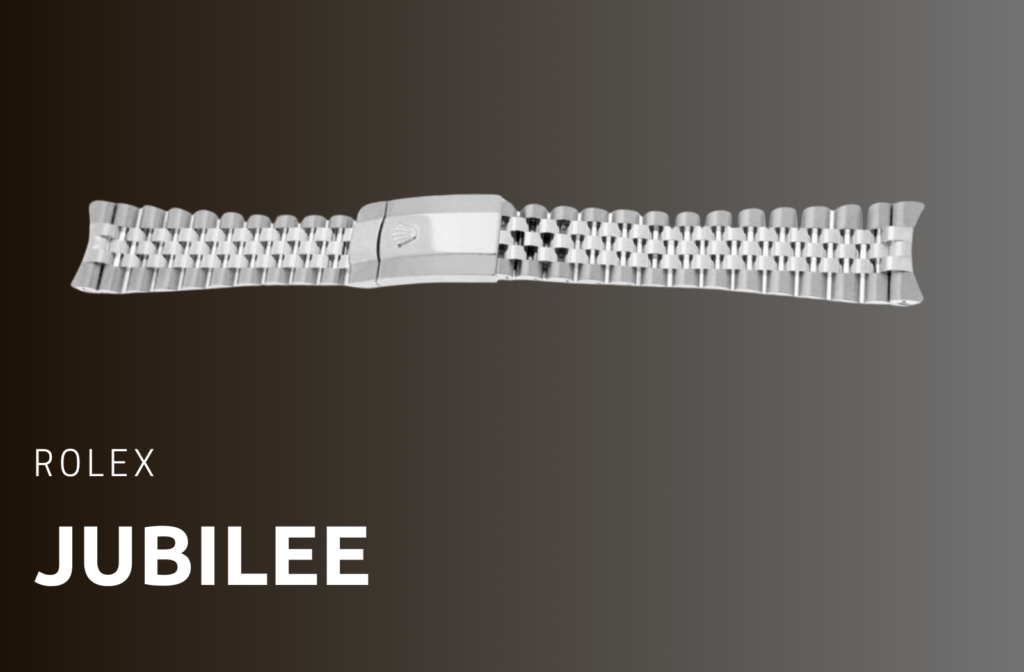
One of the most popular bracelets, first introduced in 1945 along with Rolex Datejust and patented in 1947.  But why named Jubilee? 

As the dictionary indicates, a Jubilee is a special anniversary of an event, especially one celebrating twenty-five or fifty years of a reign or activity. Jubilee bracelet was actually introduced in order to celebrate Rolex’s 40th anniversary. You can notice a five-piece link design that forms a series of small X-shaped patterns. It is considered one of the most elegant bracelets of Rolex providing style and elegance. The Jubilee bracelet can be found in all types of metals and also in a two tone. 
ROLEX BRACELET JUBILEE

ROLEX BRACELET Oyster

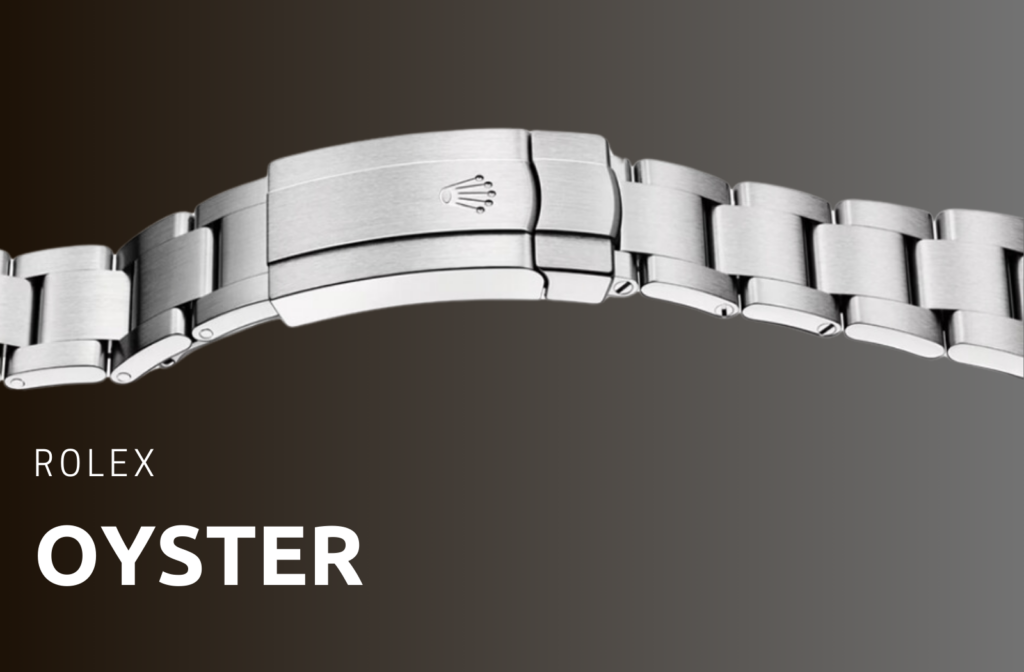
The Oyster is one of the most classic bracelet of Rolex, first introduced in the late 1930s. It is actual one of the most popular and reliable bracelets that can accompany most of Rolex models. Because of its design it is one of the most reliable bracelet that last in time with minimum damages due to heavy use. You can find it in steel, yellow gold, rose gold, combination of materials, and lastly platinum. 
ROLEX BRACELET OYSTER


ROLEX BRACELET President 

The President bracelet was created in 1956 for the launch of the Oyster Perpetual Day Date. We can notice the semi-circular three-piece links which is considered as a mix between the Oyster bracelet and the Jubilee. The President bracelet can be spotted on the Day-Date and for some versions of the Datejust.
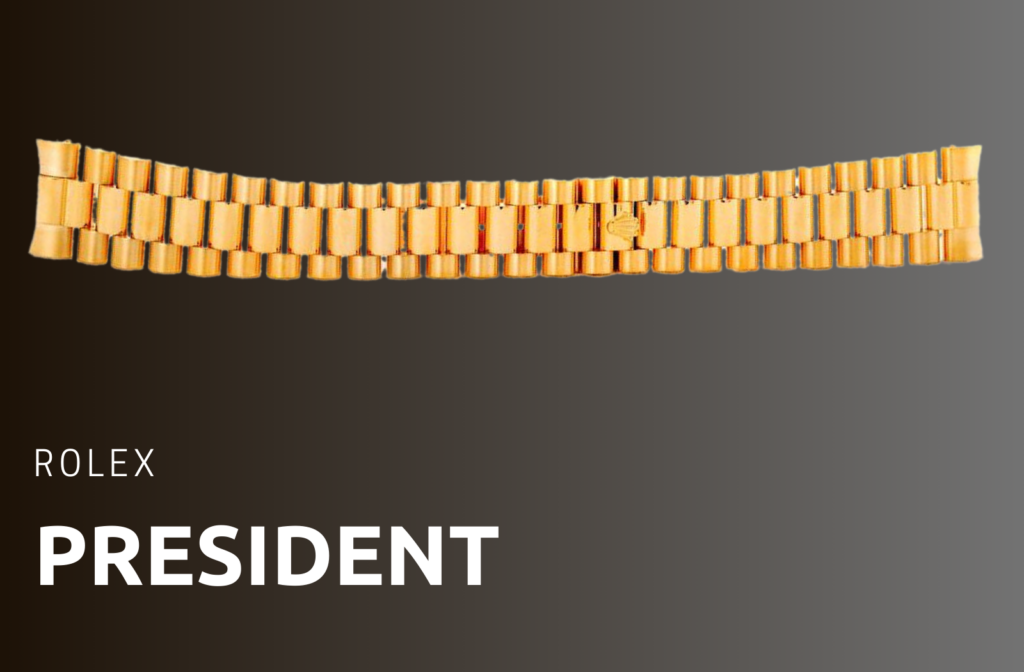
ROLEX BRACELET PRESIDENT


ROLEX BRACELET Pearlmaster 

The Pearlmaster bracelet was introduced in 1992 and is a five-piece links bracelet, with more curves than the  Oyster bracelet but simpler than Jubilee or President. It is considered one of the most elegant bracelets and accompanies diamonds and precious gems on dials, crowns and lugs. Can be spotted in platinum,  yellow gold as well as white and pink gold. 
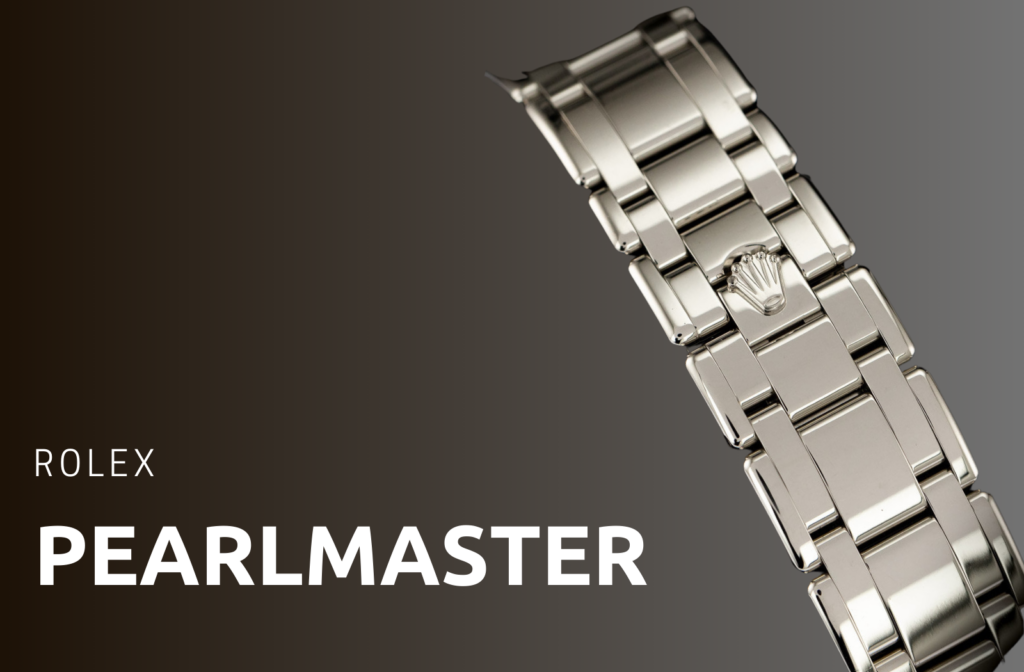
ROLEX BRACELET Pearlmaster 
ROLEX BRACELET Pearlmaster


ROLEX BRACELET Leather 

In the beginning of the 1990s Rolex introduced leather straps for Daytona until 2017, when the rubber Oysterflex bracelet replaced them.
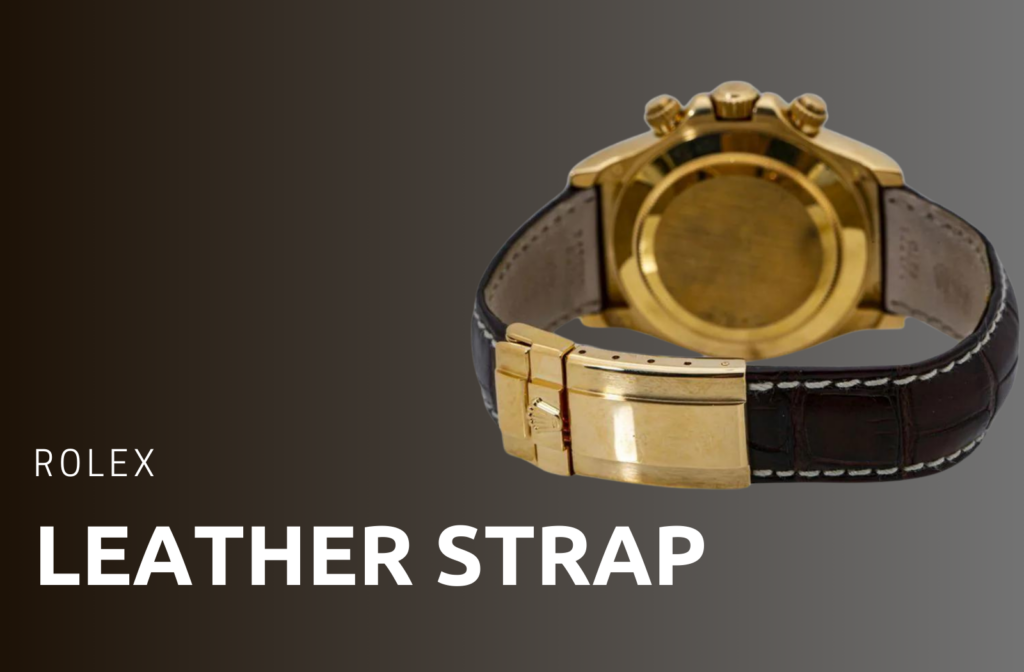
ROLEX BRACELET Oysterflex t

The Oysterflex was first introduced in 2015 by Rolex for the 2015 yacht Master Everose with reference… It provides the robustness and reliability of a metal bracelet, while preserving the comfort and suppleness of an elastomer strap. Rolex gave the opportunity of an Oysterflex bracelet for Daytona since 2018, and the Rolex Sky-Dweller since 2020.
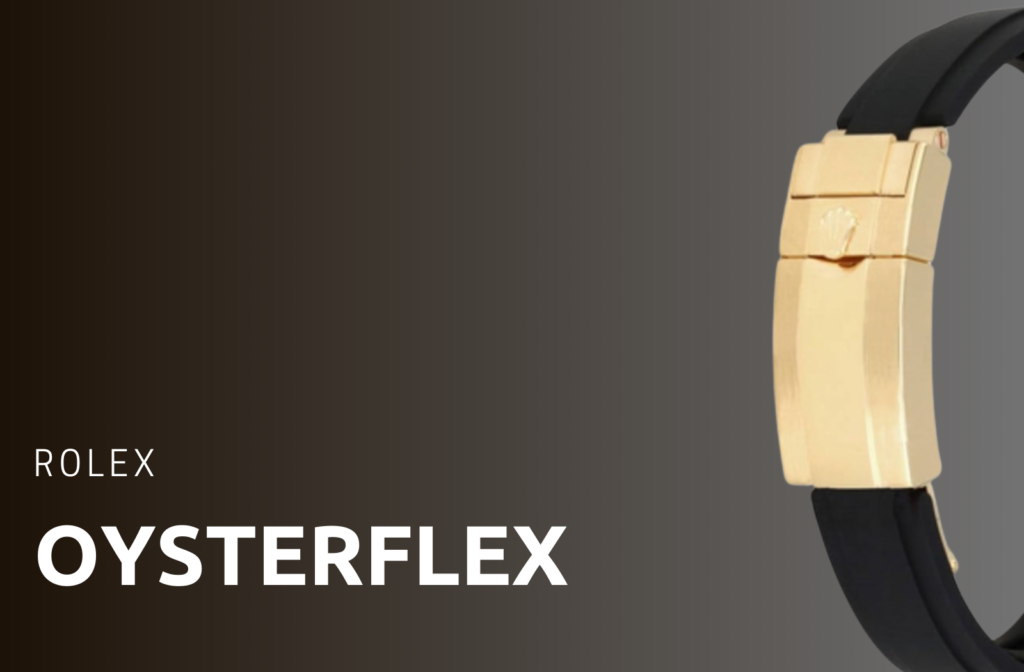
ROLEX BRACELET Oysterflex

Want to learn more about Rolex History? Check out our article that describes how everything started

Feel free to contact and share your thoughts with us your feedback is important as we are trying to create a unique interactive community for all the watch fanatics. 

Author

  • Julien Favre

    Vallée de Joux, Switzerland — Contributing Editor, high complications & independent watchmaking
    Julien Favre learned the difference between good silence and bad silence before he was ten. Good silence was his grandfather at the bench in Le Sentier, loupe screwed into one eye, breathing shallow over a disassembled minute repeater. Bad silence was the moment a hairspring pinged off the peg-wood and disappeared into the floorboards. The family atelier — three generations of movement servicing for the maisons that carpet the Vallée de Joux — was never framed as a legacy Julien was expected to join. It simply was the house, the way weather is the house in a mountain valley.
    He resisted it, predictably. He studied economics in Lausanne and spent two years in Geneva watch retail, selling the objects rather than opening them. What pulled him back was not sentiment but frustration: he found he could describe why a movement was beautiful far better than anyone selling it could, because he had seen its underside. He started writing — first a blog dissecting finishing under macro photography, then commissioned work for the trade press, then features that treated escapements the way music critics treat a fugue.
    Julien now covers high complications, restoration, and the fragile economics of independent watchmaking for European and English-language titles. His reporting is unusually technical without being cold; he is as interested in the person hunched over the bench as in the tolerances they hold. He is skeptical of hype, allergic to press-release adjectives, and reliably the first to notice when a "revolutionary" caliber is a reworked ébauche.
    He still returns to the family workshop each winter to service a single pocket watch on his grandfather's bench — a discipline, he says, that keeps his writing honest. A critic who cannot do the thing risks worshipping it.
    Byline version: Julien Favre is a contributing editor covering high complications and independent watchmaking. He grew up in a movement-servicing atelier in the Vallée de Joux and still works the family bench each winter

    Author
Author

Vallée de Joux, Switzerland — Contributing Editor, high complications & independent watchmaking Julien Favre learned the difference between good silence and bad silence before he was ten. Good silence was his grandfather at the bench in Le Sentier, loupe screwed into one eye, breathing shallow over a disassembled minute repeater. Bad silence was the moment a hairspring pinged off the peg-wood and disappeared into the floorboards. The family atelier — three generations of movement servicing for the maisons that carpet the Vallée de Joux — was never framed as a legacy Julien was expected to join. It simply was the house, the way weather is the house in a mountain valley. He resisted it, predictably. He studied economics in Lausanne and spent two years in Geneva watch retail, selling the objects rather than opening them. What pulled him back was not sentiment but frustration: he found he could describe why a movement was beautiful far better than anyone selling it could, because he had seen its underside. He started writing — first a blog dissecting finishing under macro photography, then commissioned work for the trade press, then features that treated escapements the way music critics treat a fugue. Julien now covers high complications, restoration, and the fragile economics of independent watchmaking for European and English-language titles. His reporting is unusually technical without being cold; he is as interested in the person hunched over the bench as in the tolerances they hold. He is skeptical of hype, allergic to press-release adjectives, and reliably the first to notice when a "revolutionary" caliber is a reworked ébauche. He still returns to the family workshop each winter to service a single pocket watch on his grandfather's bench — a discipline, he says, that keeps his writing honest. A critic who cannot do the thing risks worshipping it. Byline version: Julien Favre is a contributing editor covering high complications and independent watchmaking. He grew up in a movement-servicing atelier in the Vallée de Joux and still works the family bench each winter

Write A Comment