CARTIER HISTORY, The Beginning

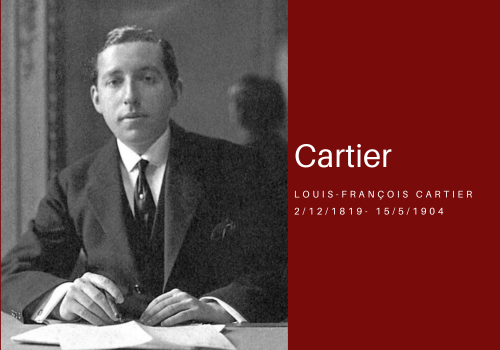
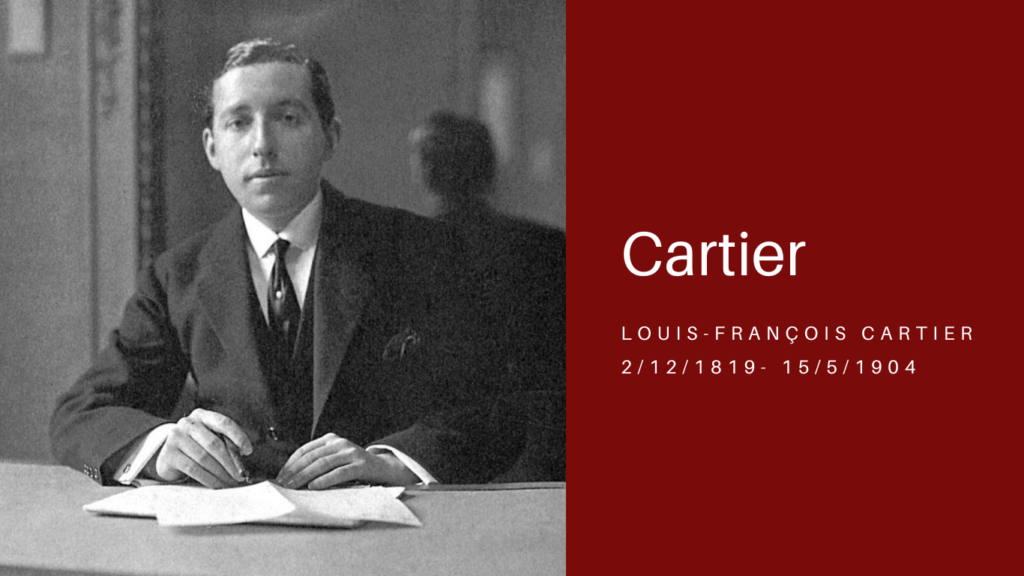
Cartier HISTORY is a very interesting  one that started 2 centuries ago. The beginning was in the city of light, in Paris on the 2nd December of 1819 when Louis-François Cartier was born. Nothing could prepare the world of what was about to happen as the chance was not on Louis Francois side. Cartier was born in a middle class modest family and nothing could prepare us or imply that this young men would be one of the most important names in the history of jewellery and watch making, symbolising in the next few years the elegance and perfection.

His father was Pierre a metal worker while his mother Elisabeth worked as a laundry woman. When he finished school he completed a watchmaker apprenticeship under Adolph Picard. Pierre turned up to be  an intelligent young businessman, jeweler and watch maker and these three charismatic elements of his personality unique combination made Cartier the iconic brand that we now love.  
CARTIER HISTORY
CARTIER HISTORY

CARTIER History 1847

Louis-François was only 28 years old when he founded Cartier, in 1847.  As Louis took over his employer’s store on the famous Parisian street Rue Montorgueil he started forming a new strategy that would attract a broader new audience. 

This was a historic moment for the jewellery world as Louis-François  was the first to introduce ‘imaginative jewellery’ as well as ‘fashion and novelty items’. As this was his first experiment towards that direction, the collection that he created was actually a curated selection of designs coming from local jewels manufacturers that were sold under his own brand.  Almost ten years later in 1853 Cartier decided to move his store to Place du Palais-Royale, a posh street with high end shops. 

In 1859 Louis-François opened his second shop at Boulevard des Italiens. This time the opening was grande as Cartier was endorsed by Princess Mathilde and Empress Eugenie marking his international successful future as a globally recognised high end jewellery brand.  
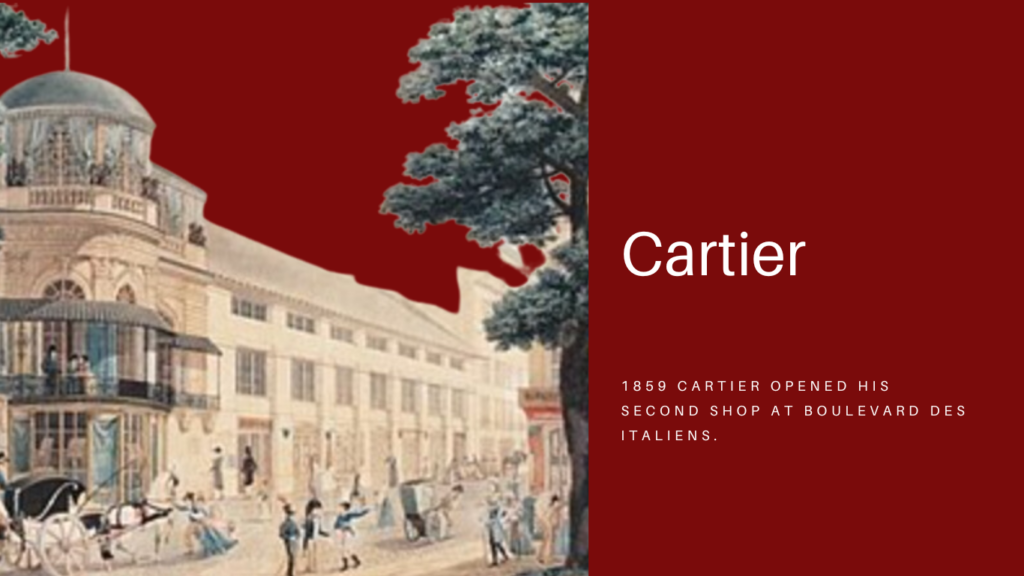
1859, Cartier Boulevard des Italiens.

In 1874 Louis-François son Alfred joined the family business broadening the product connection and working parallel with his father on this amazing business journey. The successful team were able to broaden the aristocratic clients of the brand. 

In 1899 Louis moved the Parisian brand to Rue de la Paix. Louis Cartier is considered to be as one of the most important creators of the revolutional watches that Cartier presented as he was the creative mind behind the famous mystery clock. Mystery Clock was a type of clock with a transparent dial and was named mystery as its mechanism was hidden. Louis created also fashionable wristwatches and exotic orientalist Art Deco designs, including the colourful “Tutti Frutti” jewels.

1993 RICHEMONT GROUP

In 1993 Cartier was sold to Richemont Group 

In 2024 Richemont appointed as the new CEOs at Cartier and Van Cleef & Arpels Louis Fera following his successful previous career as the CEO of Vacheron Costantin since 2017. 

Find more regarding Cartier and the Panthere Collection.

Feel free to contact and share your thoughts with us your feedback is important as we are trying to create a unique interactive community for all the watch fanatics.

Author

  • Julien Favre

    Vallée de Joux, Switzerland — Contributing Editor, high complications & independent watchmaking
    Julien Favre learned the difference between good silence and bad silence before he was ten. Good silence was his grandfather at the bench in Le Sentier, loupe screwed into one eye, breathing shallow over a disassembled minute repeater. Bad silence was the moment a hairspring pinged off the peg-wood and disappeared into the floorboards. The family atelier — three generations of movement servicing for the maisons that carpet the Vallée de Joux — was never framed as a legacy Julien was expected to join. It simply was the house, the way weather is the house in a mountain valley.
    He resisted it, predictably. He studied economics in Lausanne and spent two years in Geneva watch retail, selling the objects rather than opening them. What pulled him back was not sentiment but frustration: he found he could describe why a movement was beautiful far better than anyone selling it could, because he had seen its underside. He started writing — first a blog dissecting finishing under macro photography, then commissioned work for the trade press, then features that treated escapements the way music critics treat a fugue.
    Julien now covers high complications, restoration, and the fragile economics of independent watchmaking for European and English-language titles. His reporting is unusually technical without being cold; he is as interested in the person hunched over the bench as in the tolerances they hold. He is skeptical of hype, allergic to press-release adjectives, and reliably the first to notice when a "revolutionary" caliber is a reworked ébauche.
    He still returns to the family workshop each winter to service a single pocket watch on his grandfather's bench — a discipline, he says, that keeps his writing honest. A critic who cannot do the thing risks worshipping it.
    Byline version: Julien Favre is a contributing editor covering high complications and independent watchmaking. He grew up in a movement-servicing atelier in the Vallée de Joux and still works the family bench each winter

    Author
Author

Vallée de Joux, Switzerland — Contributing Editor, high complications & independent watchmaking Julien Favre learned the difference between good silence and bad silence before he was ten. Good silence was his grandfather at the bench in Le Sentier, loupe screwed into one eye, breathing shallow over a disassembled minute repeater. Bad silence was the moment a hairspring pinged off the peg-wood and disappeared into the floorboards. The family atelier — three generations of movement servicing for the maisons that carpet the Vallée de Joux — was never framed as a legacy Julien was expected to join. It simply was the house, the way weather is the house in a mountain valley. He resisted it, predictably. He studied economics in Lausanne and spent two years in Geneva watch retail, selling the objects rather than opening them. What pulled him back was not sentiment but frustration: he found he could describe why a movement was beautiful far better than anyone selling it could, because he had seen its underside. He started writing — first a blog dissecting finishing under macro photography, then commissioned work for the trade press, then features that treated escapements the way music critics treat a fugue. Julien now covers high complications, restoration, and the fragile economics of independent watchmaking for European and English-language titles. His reporting is unusually technical without being cold; he is as interested in the person hunched over the bench as in the tolerances they hold. He is skeptical of hype, allergic to press-release adjectives, and reliably the first to notice when a "revolutionary" caliber is a reworked ébauche. He still returns to the family workshop each winter to service a single pocket watch on his grandfather's bench — a discipline, he says, that keeps his writing honest. A critic who cannot do the thing risks worshipping it. Byline version: Julien Favre is a contributing editor covering high complications and independent watchmaking. He grew up in a movement-servicing atelier in the Vallée de Joux and still works the family bench each winter

Comments are closed.